Average Review Time for European Journal of Neuroscience

Neuroscience is the scientific written report of the nervous system.[ane] It is a multidisciplinary science that combines physiology, anatomy, molecular biology, developmental biology, cytology, information science and mathematical modeling to empathize the central and emergent properties of neurons, glia and neural circuits.[two] [three] [iv] [5] [6] The agreement of the biological ground of learning, retentiveness, behavior, perception, and consciousness has been described by Eric Kandel as the "epic claiming" of the biological sciences.[7]
The telescopic of neuroscience has broadened over fourth dimension to include dissimilar approaches used to report the nervous arrangement at different scales. The techniques used by neuroscientists have expanded enormously, from molecular and cellular studies of individual neurons to imaging of sensory, motor and cognitive tasks in the brain.
History [edit]

The earliest study of the nervous system dates to ancient Egypt. Trepanation, the surgical practice of either drilling or scraping a hole into the skull for the purpose of curing head injuries or mental disorders, or relieving cranial pressure, was outset recorded during the Neolithic flow. Manuscripts dating to 1700 BC indicate that the Egyptians had some knowledge about symptoms of brain damage.[8]
Early views on the function of the brain regarded information technology to be a "cranial stuffing" of sorts. In Egypt, from the late Middle Kingdom onwards, the brain was regularly removed in training for mummification. It was believed at the time that the center was the seat of intelligence. According to Herodotus, the first step of mummification was to "take a kleptomaniacal piece of iron, and with information technology draw out the brain through the nostrils, thus getting rid of a portion, while the skull is cleared of the rest by rinsing with drugs."[nine]
The view that the eye was the source of consciousness was not challenged until the time of the Greek medico Hippocrates. He believed that the encephalon was not merely involved with sensation—since well-nigh specialized organs (e.yard., optics, ears, natural language) are located in the head about the brain—only was also the seat of intelligence.[ten] Plato as well speculated that the brain was the seat of the rational role of the soul.[11] Aristotle, even so, believed the centre was the eye of intelligence and that the encephalon regulated the corporeality of rut from the centre.[12] This view was generally accustomed until the Roman physician Galen, a follower of Hippocrates and physician to Roman gladiators, observed that his patients lost their mental faculties when they had sustained damage to their brains.[13]
Abulcasis, Averroes, Avicenna, Avenzoar, and Maimonides, agile in the Medieval Muslim world, described a number of medical problems related to the encephalon. In Renaissance Europe, Vesalius (1514–1564), René Descartes (1596–1650), Thomas Willis (1621–1675) and Jan Swammerdam (1637–1680) also made several contributions to neuroscience.

The Golgi stain first allowed for the visualization of individual neurons.
Luigi Galvani's pioneering work in the belatedly 1700s set the phase for studying the electrical excitability of muscles and neurons. In the first half of the 19th century, Jean Pierre Flourens pioneered the experimental method of carrying out localized lesions of the brain in living animals describing their furnishings on motricity, sensibility and behavior. In 1843 Emil du Bois-Reymond demonstrated the electrical nature of the nerve signal,[14] whose speed Hermann von Helmholtz proceeded to measure,[xv] and in 1875 Richard Caton constitute electrical phenomena in the cognitive hemispheres of rabbits and monkeys.[16] Adolf Brook published in 1890 like observations of spontaneous electric activity of the brain of rabbits and dogs.[17] Studies of the brain became more than sophisticated afterward the invention of the microscope and the development of a staining procedure by Camillo Golgi during the late 1890s. The procedure used a silver chromate salt to reveal the intricate structures of individual neurons. His technique was used by Santiago Ramón y Cajal and led to the germination of the neuron doctrine, the hypothesis that the functional unit of measurement of the brain is the neuron.[18] Golgi and Ramón y Cajal shared the Nobel Prize in Physiology or Medicine in 1906 for their extensive observations, descriptions, and categorizations of neurons throughout the encephalon.
In parallel with this inquiry, work with brain-damaged patients by Paul Broca suggested that certain regions of the brain were responsible for certain functions. At the fourth dimension, Broca's findings were seen as a confirmation of Franz Joseph Gall'southward theory that language was localized and that certain psychological functions were localized in specific areas of the cognitive cortex.[xix] [xx] The localization of function hypothesis was supported by observations of epileptic patients conducted by John Hughlings Jackson, who correctly inferred the organization of the motor cortex past watching the progression of seizures through the body. Carl Wernicke further developed the theory of the specialization of specific brain structures in linguistic communication comprehension and product. Modernistic inquiry through neuroimaging techniques, still uses the Brodmann cerebral cytoarchitectonic map (referring to study of jail cell structure) anatomical definitions from this era in continuing to show that distinct areas of the cortex are activated in the execution of specific tasks.[21]
During the 20th century, neuroscience began to exist recognized as a distinct bookish subject in its own right, rather than as studies of the nervous system within other disciplines. Eric Kandel and collaborators have cited David Rioch, Francis O. Schmitt, and Stephen Kuffler equally having played critical roles in establishing the field.[22] Rioch originated the integration of basic anatomical and physiological research with clinical psychiatry at the Walter Reed Army Institute of Research, starting in the 1950s. During the same period, Schmitt established a neuroscience research program inside the Biology Department at the Massachusetts Establish of Applied science, bringing together biology, chemistry, physics, and mathematics. The kickoff freestanding neuroscience department (then called Psychobiology) was founded in 1964 at the Academy of California, Irvine by James L. McGaugh.[23] This was followed by the Department of Neurobiology at Harvard Medical Schoolhouse, which was founded in 1966 by Stephen Kuffler.[24]
The understanding of neurons and of nervous system function became increasingly precise and molecular during the 20th century. For example, in 1952, Alan Lloyd Hodgkin and Andrew Huxley presented a mathematical model for transmission of electrical signals in neurons of the behemothic axon of a squid, which they chosen "action potentials", and how they are initiated and propagated, known every bit the Hodgkin–Huxley model. In 1961–1962, Richard FitzHugh and J. Nagumo simplified Hodgkin–Huxley, in what is called the FitzHugh–Nagumo model. In 1962, Bernard Katz modeled neurotransmission across the infinite between neurons known as synapses. Beginning in 1966, Eric Kandel and collaborators examined biochemical changes in neurons associated with learning and retention storage in Aplysia. In 1981 Catherine Morris and Harold Lecar combined these models in the Morris–Lecar model. Such increasingly quantitative work gave ascent to numerous biological neuron models and models of neural ciphering.
As a result of the increasing involvement most the nervous system, several prominent neuroscience organizations have been formed to provide a forum to all neuroscientists during the 20th century. For instance, the International Brain Research Organization was founded in 1961,[25] the International Guild for Neurochemistry in 1963,[26] the European Brain and Behaviour Society in 1968,[27] and the Guild for Neuroscience in 1969.[28] Recently, the application of neuroscience research results has also given rise to applied disciplines as neuroeconomics,[29] neuroeducation,[30] neuroethics,[31] and neurolaw.[32]
Over time, brain research has gone through philosophical, experimental, and theoretical phases, with piece of work on brain simulation predicted to be important in the future.[33]
Modern neuroscience [edit]

The scientific study of the nervous organization increased significantly during the second half of the twentieth century, principally due to advances in molecular biological science, electrophysiology, and computational neuroscience. This has allowed neuroscientists to study the nervous system in all its aspects: how information technology is structured, how it works, how it develops, how information technology malfunctions, and how it tin be inverse.
For case, it has become possible to understand, in much particular, the complex processes occurring inside a single neuron. Neurons are cells specialized for communication. They are able to communicate with neurons and other cell types through specialized junctions called synapses, at which electrical or electrochemical signals can be transmitted from one cell to some other. Many neurons extrude a long thin filament of axoplasm called an axon, which may extend to distant parts of the body and are capable of rapidly conveying electrical signals, influencing the action of other neurons, muscles, or glands at their termination points. A nervous system emerges from the assemblage of neurons that are connected to each other.
The vertebrate nervous organization can be split up into ii parts: the fundamental nervous organisation (defined as the brain and spinal cord), and the peripheral nervous system. In many species — including all vertebrates — the nervous system is the virtually complex organ system in the body, with nearly of the complexity residing in the brain. The human being brain lonely contains around 1 hundred billion neurons and one hundred trillion synapses; it consists of thousands of distinguishable substructures, connected to each other in synaptic networks whose intricacies take but begun to exist unraveled. At least one out of three of the approximately 20,000 genes belonging to the homo genome is expressed mainly in the brain.[34]
Due to the loftier degree of plasticity of the homo brain, the construction of its synapses and their resulting functions change throughout life.[35]
Making sense of the nervous organization's dynamic complexity is a formidable research challenge. Ultimately, neuroscientists would like to understand every aspect of the nervous system, including how it works, how it develops, how it malfunctions, and how it can be altered or repaired. Analysis of the nervous organization is therefore performed at multiple levels, ranging from the molecular and cellular levels to the systems and cognitive levels. The specific topics that course the main focus of enquiry modify over time, driven by an ever-expanding base of operations of knowledge and the availability of increasingly sophisticated technical methods. Improvements in technology take been the primary drivers of progress. Developments in electron microscopy, reckoner science, electronics, functional neuroimaging, and genetics and genomics have all been major drivers of progress.
Perhaps i of the main unsolved bug in mod neuroscience is the so-chosen "cell types" problem which refers to the categorization, definition, and identification of all neuronal/astrocytic prison cell types in an organism. Usually, this refers to the mouse encephalon since an understanding of the mouse encephalon is seen equally a stepping rock to sympathize the homo.[36] Modern advances in the classification of neuronal cells have been enabled past electrophysiological recording, single-jail cell genetic sequencing, and high-quality microscopy, which have been recently combined into a single method pipeline chosen Patch-seq in which all three methods are simultaneously applied using miniature tools.[37] The efficiency of this method and the large amounts of information that is generated allowed researchers to make some full general conclusions about cell types; for example that the human being and mouse brain accept different versions of fundamentally the same jail cell types.[38]
Molecular and cellular neuroscience [edit]

Basic questions addressed in molecular neuroscience include the mechanisms by which neurons express and answer to molecular signals and how axons form complex connectivity patterns. At this level, tools from molecular biology and genetics are used to sympathize how neurons develop and how genetic changes affect biological functions. The morphology, molecular identity, and physiological characteristics of neurons and how they relate to unlike types of behavior are besides of considerable involvement.
Questions addressed in cellular neuroscience include the mechanisms of how neurons procedure signals physiologically and electrochemically. These questions include how signals are processed by neurites and somas and how neurotransmitters and electrical signals are used to procedure data in a neuron. Neurites are thin extensions from a neuronal cell trunk, consisting of dendrites (specialized to receive synaptic inputs from other neurons) and axons (specialized to conduct nerve impulses called action potentials). Somas are the cell bodies of the neurons and contain the nucleus.
Another major expanse of cellular neuroscience is the investigation of the development of the nervous system. Questions include the patterning and regionalization of the nervous system, neural stem cells, differentiation of neurons and glia (neurogenesis and gliogenesis), neuronal migration, axonal and dendritic development, trophic interactions, and synapse formation.
Computational neurogenetic modeling is concerned with the evolution of dynamic neuronal models for modeling brain functions with respect to genes and dynamic interactions betwixt genes.
Neural circuits and systems [edit]
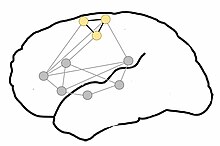
Proposed system of motor-semantic neural circuits for action linguistic communication comprehension. Adjusted from Shebani et al. (2013)
Questions in systems neuroscience include how neural circuits are formed and used anatomically and physiologically to produce functions such as reflexes, multisensory integration, motor coordination, cyclic rhythms, emotional responses, learning, and memory. In other words, they address how these neural circuits function in large-scale brain networks, and the mechanisms through which behaviors are generated. For example, systems level analysis addresses questions concerning specific sensory and motor modalities: how does vision work? How do songbirds learn new songs and bats localize with ultrasound? How does the somatosensory organization procedure tactile information? The related fields of neuroethology and neuropsychology address the question of how neural substrates underlie specific animate being and human behaviors. Neuroendocrinology and psychoneuroimmunology examine interactions betwixt the nervous system and the endocrine and allowed systems, respectively. Despite many advancements, the mode that networks of neurons perform circuitous cerebral processes and behaviors is nonetheless poorly understood.
Cognitive and behavioral neuroscience [edit]
Cognitive neuroscience addresses the questions of how psychological functions are produced by neural circuitry. The emergence of powerful new measurement techniques such every bit neuroimaging (e.g., fMRI, PET, SPECT), EEG, Million, electrophysiology, optogenetics and human genetic assay combined with sophisticated experimental techniques from cerebral psychology allows neuroscientists and psychologists to address abstract questions such as how cognition and emotion are mapped to specific neural substrates. Although many studies nonetheless hold a reductionist stance looking for the neurobiological basis of cerebral phenomena, recent inquiry shows that there is an interesting coaction between neuroscientific findings and conceptual inquiry, soliciting and integrating both perspectives. For example, neuroscience enquiry on empathy solicited an interesting interdisciplinary debate involving philosophy, psychology and psychopathology.[39] Moreover, the neuroscientific identification of multiple retentivity systems related to different brain areas has challenged the idea of retentivity equally a literal reproduction of the by, supporting a view of retentiveness as a generative, constructive and dynamic procedure.[twoscore]
Neuroscience is besides centrolineal with the social and behavioral sciences, as well as with nascent interdisciplinary fields. Examples of such alliances include neuroeconomics, decision theory, social neuroscience, and neuromarketing to address circuitous questions most interactions of the brain with its environment. A study into consumer responses for case uses EEG to investigate neural correlates associated with narrative transportation into stories about energy efficiency.[41]
Computational neuroscience [edit]
Questions in computational neuroscience tin can span a wide range of levels of traditional analysis, such as evolution, structure, and cognitive functions of the encephalon. Research in this field utilizes mathematical models, theoretical assay, and computer simulation to depict and verify biologically plausible neurons and nervous systems. For example, biological neuron models are mathematical descriptions of spiking neurons which can be used to describe both the behavior of single neurons also as the dynamics of neural networks. Computational neuroscience is ofttimes referred to as theoretical neuroscience.
Nanoparticles in medicine are versatile in treating neurological disorders showing promising results in mediating drug transport across the blood brain barrier.[42] Implementing nanoparticles in antiepileptic drugs enhances their medical efficacy past increasing bioavailability in the bloodstream, besides as offering a measure of control in release time concentration.[42] Although nanoparticles tin can assist therapeutic drugs past adjusting physical properties to achieve desirable effects, inadvertent increases in toxicity oftentimes occur in preliminary drug trials.[43] Furthermore, production of nanomedicine for drug trials is economically consuming, hindering progress in their implementation. Computational models in nanoneuroscience provide alternatives to report the efficacy of nanotechnology-based medicines in neurological disorders while mitigating potential side effects and development costs.[42]
Nanomaterials ofttimes operate at length scales between classical and quantum regimes.[44] Due to the associated uncertainties at the length scales that nanomaterials operate, it is difficult to predict their behavior prior to in vivo studies.[42] Classically, the concrete processes which occur throughout neurons are analogous to electric circuits. Designers focus on such analogies and model brain action as a neural circuit.[45] Success in computational modeling of neurons take led to the development of stereochemical models that accurately predict acetylcholine receptor-based synapses operating at microsecond fourth dimension scales.[45]
Ultrafine nanoneedles for cellular manipulations are thinner than the smallest single walled carbon nanotubes. Computational breakthrough chemistry[46] is used to blueprint ultrafine nanomaterials with highly symmetrical structures to optimize geometry, reactivity and stability.[44]
Beliefs of nanomaterials are dominated by long ranged non-bonding interactions.[47] Electrochemical processes that occur throughout the encephalon generate an electric field which tin inadvertently affect the behavior of some nanomaterials.[44] Molecular dynamics simulations can mitigate the development phase of nanomaterials as well as prevent neural toxicity of nanomaterials post-obit in vivo clinical trials.[43] Testing nanomaterials using molecular dynamics optimizes nano characteristics for therapeutic purposes by testing different environs weather, nanomaterial shape fabrications, nanomaterial surface backdrop, etc. without the need for in vivo experimentation.[48] Flexibility in molecular dynamic simulations allows medical practitioners to personalize treatment. Nanoparticle related data from translational nanoinformatics links neurological patient specific data to predict treatment response.[47]
Neuroscience and medicine [edit]
Neurology, psychiatry, neurosurgery, psychosurgery, anesthesiology and pain medicine, neuropathology, neuroradiology, ophthalmology, otolaryngology, clinical neurophysiology, habit medicine, and sleep medicine are some medical specialties that specifically address the diseases of the nervous organisation. These terms also refer to clinical disciplines involving diagnosis and handling of these diseases.
Neurology works with diseases of the primal and peripheral nervous systems, such every bit amyotrophic lateral sclerosis (ALS) and stroke, and their medical treatment. Psychiatry focuses on affective, behavioral, cognitive, and perceptual disorders. Anesthesiology focuses on perception of pain, and pharmacologic alteration of consciousness. Neuropathology focuses upon the classification and underlying pathogenic mechanisms of central and peripheral nervous system and musculus diseases, with an emphasis on morphologic, microscopic, and chemically observable alterations. Neurosurgery and psychosurgery work primarily with surgical treatment of diseases of the key and peripheral nervous systems.
Translational enquiry [edit]
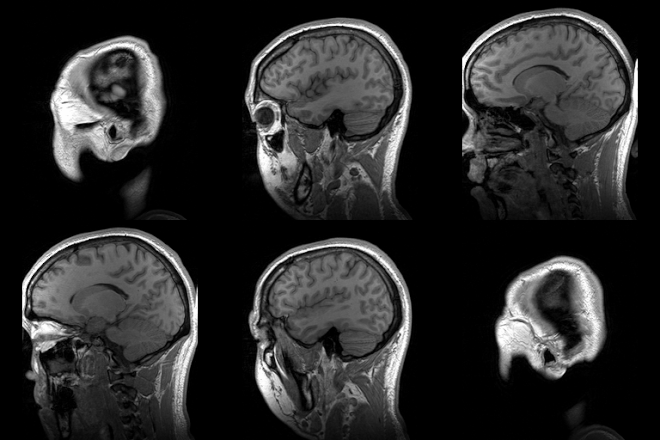
Parasagittal MRI of the head of a patient with beneficial familial macrocephaly
Recently, the boundaries between diverse specialties accept blurred, every bit they are all influenced by basic research in neuroscience. For example, brain imaging enables objective biological insight into mental illnesses, which tin can lead to faster diagnosis, more accurate prognosis, and improved monitoring of patient progress over time.[49]
Integrative neuroscience describes the effort to combine models and information from multiple levels of research to develop a coherent model of the nervous system. For example, brain imaging coupled with physiological numerical models and theories of fundamental mechanisms may shed light on psychiatric disorders.[50]
Another of import expanse of translational inquiry is brain-calculator interfaces, or machines that are able to communicate and influence the brain. brain-computer interfaces (BCIs) are currently being researched for their potential to repair neural systems and restore certain cognitive functions.[51] However, some upstanding considerations have to be dealt with before they are accepted.[52] [53]
Major branches [edit]
Modern neuroscience education and inquiry activities can be very roughly categorized into the following major branches, based on the subject and calibration of the system in test besides as distinct experimental or curricular approaches. Private neuroscientists, however, often work on questions that span several distinct subfields.
| Branch | Description |
|---|---|
| Melancholia neuroscience | Affective neuroscience is the study of the neural mechanisms involved in emotion, typically through experimentation on beast models.[54] |
| Behavioral neuroscience | Behavioral neuroscience (likewise known as biological psychology, physiological psychology, biopsychology, or psychobiology) is the awarding of the principles of biology to the study of genetic, physiological, and developmental mechanisms of beliefs in humans and non-human animals.[55] |
| Cellular neuroscience | Cellular neuroscience is the report of neurons at a cellular level including morphology and physiological properties.[56] |
| Clinical neuroscience | The scientific study of the biological mechanisms that underlie the disorders and diseases of the nervous arrangement.[57] |
| Cognitive neuroscience | Cognitive neuroscience is the report of the biological mechanisms underlying cognition.[58] |
| Computational neuroscience | Computational neuroscience is the theoretical study of the nervous system.[59] |
| Cultural neuroscience | Cultural neuroscience is the study of how cultural values, practices and beliefs shape and are shaped by the heed, brain and genes across multiple timescales.[60] |
| Developmental neuroscience | Developmental neuroscience studies the processes that generate, shape, and reshape the nervous system and seeks to describe the cellular footing of neural development to address underlying mechanisms.[61] |
| Evolutionary neuroscience | Evolutionary neuroscience studies the evolution of nervous systems. |
| Molecular neuroscience | Molecular neuroscience studies the nervous system with molecular biological science, molecular genetics, protein chemistry, and related methodologies.[62] |
| Nanoneuroscience | An interdisciplinary field that integrates nanotechnology and neuroscience.[63] |
| Neural technology | Neural engineering uses applied science techniques to interact with, sympathise, repair, supervene upon, or raise neural systems.[64] |
| Neuroanatomy | Neuroanatomy is the study of the anatomy of nervous systems.[65] |
| Neurochemistry | Neurochemistry is the study of how neurochemicals interact and influence the function of neurons.[66] |
| Neuroethology | Neuroethology is the study of the neural basis of non-human animals behavior. |
| Neurogastronomy | Neurogastronomy is the written report of flavor and how information technology affects sensation, cognition, and retentiveness.[67] |
| Neurogenetics | Neurogenetics is the study of the genetical basis of the development and function of the nervous arrangement.[68] |
| Neuroimaging | Neuroimaging includes the use of various techniques to either directly or indirectly image the structure and function of the brain.[69] |
| Neuroimmunology | Neuroimmunology is concerned with the interactions betwixt the nervous and the immune system.[70] |
| Neuroinformatics | Neuroinformatics is a discipline inside bioinformatics that conducts the organization of neuroscience data and awarding of computational models and analytical tools.[71] |
| Neurolinguistics | Neurolinguistics is the study of the neural mechanisms in the human brain that control the comprehension, production, and acquisition of language.[72] [73] |
| Neuro-ophthalmology | Neuro-ophthalmology is an academically-oriented subspecialty that merges the fields of neurology and ophthalmology, often dealing with complex systemic diseases that take manifestations in the visual organization. |
| Neurophysics | Neurophysics is the branch of biophysics dealing with the development and use of concrete methods to proceeds information nearly the nervous system.[74] |
| Neurophysiology | Neurophysiology is the report of the structure and office of the nervous system, generally using physiological techniques that include measurement and stimulation with electrodes or optically with ion- or voltage-sensitive dyes or light-sensitive channels.[75] |
| Neuropsychology | Neuropsychology is a subject area that resides under the umbrellas of both psychology and neuroscience, and is involved in activities in the arenas of both basic science and engineering. In psychology, it is nigh closely associated with biopsychology, clinical psychology, cerebral psychology, and developmental psychology. In neuroscience, it is most closely associated with the cognitive, behavioral, social, and melancholia neuroscience areas. In the practical and medical domain, it is related to neurology and psychiatry.[76] |
| Paleoneurobiology | Paleoneurobiology is a field that combines techniques used in paleontology and archæology to written report brain evolution, especially that of the human brain.[77] |
| Social neuroscience | Social neuroscience is an interdisciplinary field devoted to understanding how biological systems implement social processes and behavior, and to using biological concepts and methods to inform and refine theories of social processes and behavior.[78] |
| Systems neuroscience | Systems neuroscience is the study of the part of neural circuits and systems.[79] |
Neuroscience organizations [edit]
The largest professional neuroscience organization is the Society for Neuroscience (SFN), which is based in the United States simply includes many members from other countries. Since its founding in 1969 the SFN has grown steadily: as of 2010 it recorded 40,290 members from 83 countries.[80] Annual meetings, held each year in a different American city, draw omnipresence from researchers, postdoctoral fellows, graduate students, and undergraduates, every bit well as educational institutions, funding agencies, publishers, and hundreds of businesses that supply products used in enquiry.
Other major organizations devoted to neuroscience include the International Brain Enquiry Arrangement (IBRO), which holds its meetings in a country from a different part of the earth each year, and the Federation of European Neuroscience Societies (FENS), which holds a meeting in a different European urban center every two years. FENS comprises a set up of 32 national-level organizations, including the British Neuroscience Association, the German language Neuroscience Gild (Neurowissenschaftliche Gesellschaft), and the French Société des Neurosciences.[81] The first National Honor Social club in Neuroscience, Nu Rho Psi, was founded in 2006. Numerous youth neuroscience societies which support undergraduates, graduates and early on career researchers also be, such every bit But Neuroscience[82] and Project Encephalon.[83]
In 2013, the BRAIN Initiative was announced in the U.s.. The International Brain Initiative[84] was created in 2017,[85] currently integrated by more than seven national-level encephalon research initiatives (US, Europe, Allen Institute, Japan, Cathay, Commonwealth of australia,[86] Canada,[87] Korea,[88] and Israel[89])[ninety] spanning four continents.
Public instruction and outreach [edit]
In addition to conducting traditional research in laboratory settings, neuroscientists have besides been involved in the promotion of sensation and knowledge about the nervous system among the general public and government officials. Such promotions have been done by both individual neuroscientists and large organizations. For case, individual neuroscientists take promoted neuroscience education among young students by organizing the International Brain Bee, which is an academic competition for high school or secondary school students worldwide.[91] In the Usa, large organizations such as the Society for Neuroscience have promoted neuroscience education by developing a primer called Brain Facts,[92] collaborating with public school teachers to develop Neuroscience Core Concepts for K-12 teachers and students,[93] and cosponsoring a entrada with the Dana Foundation called Encephalon Awareness Calendar week to increase public awareness almost the progress and benefits of encephalon enquiry.[94] In Canada, the CIHR Canadian National Encephalon Bee is held annually at McMaster Academy.[95]
Neuroscience educators formed Faculty for Undergraduate Neuroscience (FUN) in 1992 to share best practices and provide travel awards for undergraduates presenting at Lodge for Neuroscience meetings.[96]
Neuroscientists have besides collaborated with other teaching experts to report and refine educational techniques to optimize learning amongst students, an emerging field chosen educational neuroscience.[97] Federal agencies in the United states, such as the National Institute of Health (NIH)[98] and National Scientific discipline Foundation (NSF),[99] have too funded enquiry that pertains to best practices in teaching and learning of neuroscience concepts.
Engineering applications of neuroscience [edit]
Neuromorphic reckoner fries [edit]
Neuromorphic engineering is a co-operative of neuroscience that deals with creating functional physical models of neurons for the purposes of useful computation. The emergent computational properties of neuromorphic computers are fundamentally different from conventional computers in the sense that they are a complex organisation, and that the computational components are interrelated with no central processor.[100]
One instance of such a calculator is the SpiNNaker supercomputer.[ commendation needed ]
Sensors can also be made smart with neuromorphic technology. An example of this is the Result Photographic camera'southward BrainScaleS (brain-inspired Multiscale Computation in Neuromorphic Hybrid Systems), a hybrid analog neuromorphic supercomputer located at Heidelberg University in Germany. Information technology was adult equally part of the Human Encephalon Project's neuromorphic computing platform and is the complement to the SpiNNaker supercomputer, which is based on digital technology. The architecture used in BrainScaleS mimics biological neurons and their connections on a physical level; additionally, since the components are made of silicon, these model neurons operate on average 864 times (24 hours of real time is 100 seconds in the machine simulation) that of their biological counterparts.[101]
Recent advances in neuromorphic microchip technology accept led a group of scientists to create an artificial neuron that tin can replace existent neurons in diseases.[102] [103]
[edit]
See also [edit]
- List of neuroscience databases
- List of neuroscience journals
- List of neuroscience topics
- List of neuroscientists
- Neuroplasticity
- Neurophysiology
- Noogenesis
- Outline of brain mapping
- Outline of the human brain
- List of regions in the homo brain
- Gut–brain axis
- Connectomics
- Affect (psychology)
References [edit]
- ^ "Neuroscience". Merriam-Webster Medical Dictionary.
- ^ Kandel, Eric R. (2012). Principles of Neural Science, Fifth Edition. McGraw-Colina Pedagogy. pp. I. Overall perspective. ISBN978-0071390118.
- ^ Ayd, Frank J., Jr. (2000). Lexicon of Psychiatry, Neurology and the Neurosciences. Lippincott, Williams & Wilkins. p. 688. ISBN978-0781724685.
- ^ Shulman, Robert G. (2013). "Neuroscience: A Multidisciplinary, Multilevel Field". Brain Imaging: What information technology Can (and Cannot) Tell Us About Consciousness. Oxford University Press. p. 59. ISBN9780199838721.
- ^ Ogawa, Hiroto; Oka, Kotaro (2013). Methods in Neuroethological Research. Springer. p. 5. ISBN9784431543305.
- ^ Tanner, Kimberly D. (2006-01-01). "Issues in Neuroscience Education: Making Connections". CBE: Life Sciences Education. five (two): 85. doi:10.1187/cbe.06-04-0156. ISSN 1931-7913. PMC1618510.
- ^ Kandel, Eric R. (2012). Principles of Neural Science, Fifth Edition. McGraw-Loma Educational activity. p. 5. ISBN978-0071390118.
The terminal frontier of the biological sciences – their ultimate challenge – is to understand the biological basis of consciousness and the mental processes by which we perceive, human action, learn, and call up.
- ^ Mohamed W (2008). "The Edwin Smith Surgical Papyrus: Neuroscience in Ancient Arab republic of egypt". IBRO History of Neuroscience. Archived from the original on 2014-07-06. Retrieved 2014-07-06 .
- ^ Herodotus (2009) [440 BCE]. The Histories: Book II (Euterpe). Translated by George Rawlinson.
- ^ Breitenfeld, T.; Jurasic, One thousand. J.; Breitenfeld, D. (September 2014). "Hippocrates: the forefather of neurology". Neurological Sciences. 35 (9): 1349–1352. doi:x.1007/s10072-014-1869-3. ISSN 1590-3478. PMID 25027011. S2CID 2002986.
- ^ Plato (2009) [360 BCE]. Timaeus. Translated by George Rawlinson.
- ^ Finger, Stanley (2001). Origins of Neuroscience: A History of Explorations into Brain Function (3rd ed.). New York: Oxford University Press, Usa. pp. 3–17. ISBN978-0-19-514694-3.
- ^ Freemon, F. R. (23 Sep 2009). "Galen'southward ideas on neurological function". Journal of the History of the Neurosciences. 3 (4): 263–271. doi:x.1080/09647049409525619. ISSN 0964-704X. PMID 11618827.
- ^ Finkelstein, Gabriel (2013). Emil du Bois-Reymond: Neuroscience, Self, and Gild in Nineteenth-Century Germany. Cambridge; London: The MIT Press. pp. 72–74, 89–95. ISBN9780262019507.
- ^ Harrison, David W. (2015). Encephalon Disproportion and Neural Systems Foundations in Clinical Neuroscience and Neuropsychology. Springer International Publishing. pp. 15–16. ISBN978-iii-319-13068-2.
- ^ "Caton, Richard - The electric currents of the brain". echo.mpiwg-berlin.mpg.de . Retrieved 2018-12-21 .
- ^ Coenen, Anton; Edward Fine; Oksana Zayachkivska (2014). "Adolf Brook: A Forgotten Pioneer In Electroencephalography". Journal of the History of the Neurosciences. 23 (three): 276–286. doi:ten.1080/0964704x.2013.867600. PMID 24735457. S2CID 205664545.
- ^ Guillery, R (Jun 2005). "Observations of synaptic structures: origins of the neuron doctrine and its current status". Philos Trans R Soc Lond B Biol Sci. 360 (1458): 1281–307. doi:10.1098/rstb.2003.1459. PMC1569502. PMID 16147523.
- ^ Greenblatt SH (1995). "Phrenology in the science and culture of the 19th century". Neurosurgery. 37 (iv): 790–805. doi:10.1227/00006123-199510000-00025. PMID 8559310.
- ^ Acquit MF; Connors BW; Paradiso MA (2001). Neuroscience: Exploring the Brain (2nd ed.). Philadelphia: Lippincott Williams & Wilkins. ISBN978-0-7817-3944-3.
- ^ Kandel ER; Schwartz JH; Jessel TM (2000). Principles of Neural Science (4th ed.). New York: McGraw-Hill. ISBN978-0-8385-7701-1.
- ^ Cowan, West.M.; Harter, D.H.; Kandel, E.R. (2000). "The emergence of modern neuroscience: Some implications for neurology and psychiatry". Almanac Review of Neuroscience. 23: 345–346. doi:10.1146/annurev.neuro.23.1.343. PMID 10845068.
- ^ "James McGaugh". The history of neuroscience in autobiography. Volume. Vol. 4. Squire, Larry R., Society for Neuroscience. Washington DC: Guild for Neuroscience. 1996. p. 410. ISBN0916110516. OCLC 36433905.
{{cite volume}}: CS1 maint: others (link) - ^ "History - Department of Neurobiology". Archived from the original on 2019-09-27. Retrieved 2017-10-17 .
- ^ "History of IBRO". International Brain Inquiry Organization. 2010.
- ^ The Beginning Archived Apr 21, 2012, at the Wayback Machine, International Society for Neurochemistry
- ^ "About EBBS". European Encephalon and Behaviour Order. 2009. Archived from the original on 2016-03-03.
- ^ "About SfN". Social club for Neuroscience.
- ^ "How can neuroscience inform economics?" (PDF). Current Opinion in Behavioral Sciences.
- ^ Zull, J. (2002). The fine art of changing the brain: Enriching the practice of educational activity by exploring the biological science of learning. Sterling, Virginia: Stylus Publishing, LLC
- ^ "What is Neuroethics?". world wide web.neuroethicssociety.org . Retrieved 2019-02-22 .
- ^ Petoft, Arian (2015-01-05). "Neurolaw: A brief introduction". Iranian Periodical of Neurology. 14 (1): 53–58. ISSN 2008-384X. PMC4395810. PMID 25874060.
- ^ Fan, Xue; Markram, Henry (2019-05-07). "A Brief History of Simulation Neuroscience". Frontiers in Neuroinformatics. 13: 32. doi:x.3389/fninf.2019.00032. ISSN 1662-5196. PMC6513977. PMID 31133838.
- ^ U.South. National Institute of Neurological Disorders and Stroke. Brain nuts: genes at work in the encephalon. Date last modified: 2018-12-27. [1] Retrieved Feb. 4, 2019.
- ^ The U.s. Section of Health and Human Services. Mental Health: A Report of the Surgeon General. "Affiliate two: The Fundamentals of Mental Wellness and Mental Disease" pp 38 [two] Retrieved May 21, 2012
- ^ "Mapping the Mouse Encephalon, and past Extension, the Human Brain Too". UC Health - UC San Diego.
- ^ Lipovsek, Marcela; Bardy, Cedric; Cadwell, Cathryn R.; Hadley, Kristen; Kobak, Dmitry; Tripathy, Shreejoy J. (iii February 2021). "Patch-seq: Past, Present, and Future". The Periodical of Neuroscience. 41 (v): 937–946. doi:10.1523/JNEUROSCI.1653-20.2020. PMC7880286. PMID 33431632.
- ^ Hodge, Rebecca D.; Bakken, Trygve E.; Miller, Jeremy A.; Smith, Kimberly A.; Barkan, Eliza R.; Graybuck, Lucas T.; Close, Jennie L.; Long, Brian; Johansen, Nelson; Penn, Osnat; Yao, Zizhen; Eggermont, Jeroen; Höllt, Thomas; Levi, Boaz P.; Shehata, Soraya I.; Aevermann, Brian; Beller, Allison; Bertagnolli, Darren; Brouner, Krissy; Casper, Tamara; Cobbs, Charles; Dalley, Rachel; Dee, Nick; Ding, Song-Lin; Ellenbogen, Richard Thou.; Fong, Olivia; Garren, Emma; Goldy, Jeff; Gwinn, Ryder P.; Hirschstein, Daniel; Keene, C. Dirk; Keshk, Mohamed; Ko, Andrew L.; Lathia, Kanan; Mahfouz, Ahmed; Maltzer, Zoe; McGraw, Medea; Nguyen, Thuc Nghi; Nyhus, Julie; Ojemann, Jeffrey G.; Oldre, Aaron; Parry, Sheana; Reynolds, Shannon; Rimorin, Christine; Shapovalova, Nadiya V.; Somasundaram, Saroja; Szafer, Aaron; Thomsen, Elliot R.; Tieu, Michael; Quon, Gerald; Scheuermann, Richard H.; Yuste, Rafael; Sunkin, Susan M.; Lelieveldt, Boudewijn; Feng, David; Ng, Lydia; Bernard, Amy; Hawrylycz, Michael; Phillips, John Due west.; Tasic, Bosiljka; Zeng, Hongkui; Jones, Allan R.; Koch, Christof; Lein, Ed S. (5 September 2019). "Conserved cell types with divergent features in man versus mouse cortex". Nature. 573 (7772): 61–68. Bibcode:2019Natur.573...61H. doi:ten.1038/s41586-019-1506-7. PMC6919571. PMID 31435019.
- ^ Aragona Grand, Kotzalidis GD, Puzella A. (2013) The many faces of empathy, between phenomenology and neuroscience. Archives of Psychiatry and Psychotherapy, 4:five-12
- ^ Ofengenden, Tzofit (2014). "Retentiveness germination and belief" (PDF). Dialogues in Philosophy, Mental and Neuro Sciences. 7 (ii): 34–44.
- ^ Gordon, Ross; Ciorciari, Joseph; Van Laer, Tom (2018). "Using EEG to examine the role of attention, working memory, emotion, and imagination in narrative transportation" (PDF). European Journal of Marketing. 52: 92–117. doi:10.1108/EJM-12-2016-0881. SSRN 2892967.
- ^ a b c d Haeusler, Southward.; Maass, W. (2017). "Application of modelling and nanotechnology-based approaches: The emergence of breakthroughs in theranostics of primal nervous system disorders". Life Sciences. 182: 93–103. doi:x.1016/j.lfs.2017.06.001. PMID 28583367. S2CID 7598262.
- ^ a b Maojo, V.; Chiesa, S.; Martin-Sanchez, F.; Kern, J.; Potamias, G.; Crespo, J.; Iglesia, D. D. L. (2011). "International Efforts in Nanoinformatics Research Applied to Nanomedicine". Methods of Information in Medicine. 50 (1): 84–95. doi:x.3414/me10-02-0012. PMID 21085742.
- ^ a b c Poater, A.; Saliner, A. G.; Carbó-Dorca, R.; Poater, J.; Solà, M.; Cavallo, 50.; Worth, A. P. (2009). "Modeling the structure-property of nanoneedles: A journey toward nanomedicine". Periodical of Computational Chemistry. 30 (2): 275–284. doi:ten.1002/jcc.21041. PMID 18615420. S2CID 2304139.
- ^ a b Haeusler, South.; Maass, W. (2006). "A Statistical Assay of Information-Processing Properties of Lamina-Specific Cortical Microcircuit Models". Cerebral Cortex. 17 (one): 149–162. doi:x.1093/cercor/bhj132. PMID 16481565.
- ^ Cancès, Eric; Defranceschi, Mireille; Kutzelnigg, Werner; Le Bris, Claude; Maday, Yvon (2003). "Computational quantum chemistry: A primer". Special Volume, Computational Chemistry. Handbook of Numerical Analysis. Vol. 10. pp. 3–270. doi:10.1016/s1570-8659(03)10003-8. ISBN9780444512482.
- ^ a b Ghosh, S.; Matsuoka, Y.; Asai, Y.; Hsin, M.-Y.; Kitano, H. (2011). "Software for systems biology: from tools to integrated platforms". Nature Reviews Genetics. 12 (12): 821–832. doi:10.1038/nrg3096. PMID 22048662. S2CID 21037536.
- ^ Shah, S.; Liu, Y.; Hu, West.; Gao, J. (2011). "Modeling Particle Shape-Dependent Dynamics in Nanomedicine". Journal of Nanoscience and Nanotechnology. 11 (two): 919–928. doi:ten.1166/jnn.2011.3536. PMC3050532. PMID 21399713.
- ^ Lepage M (2010). "Enquiry at the Brain Imaging Centre". Douglas Mental Health University Institute. Archived from the original on March 5, 2012.
- ^ Gordon E (2003). "Integrative neuroscience". Neuropsychopharmacology. 28 Suppl 1: S2-8. doi:x.1038/sj.npp.1300136. PMID 12827137.
- ^ Krucoff, Max O.; Rahimpour, Shervin; Slutzky, Marc W.; Edgerton, Five. Reggie; Turner, Dennis A. (27 Dec 2016). "Enhancing Nervous System Recovery through Neurobiologics, Neural Interface Training, and Neurorehabilitation". Frontiers in Neuroscience. 10: 584. doi:10.3389/fnins.2016.00584. PMC5186786. PMID 28082858.
- ^ Haselager, Pim; Vlek, Rutger; Hill, Jeremy; Nijboer, Femke (1 November 2009). "A note on ethical aspects of BCI". Neural Networks. 22 (ix): 1352–1357. doi:10.1016/j.neunet.2009.06.046. PMID 19616405.
- ^ Nijboer, Femke; Clausen, Jens; Allison, Brendan Z.; Haselager, Pim (2013). "The Asilomar Survey: Stakeholders' Opinions on Ethical Issues Related to Encephalon-Computer Interfacing". Neuroethics. 6 (iii): 541–578. doi:x.1007/s12152-011-9132-vi. PMC3825606. PMID 24273623.
- ^ Panksepp J (1990). "A office for "affective neuroscience" in agreement stress: the case of separation distress circuitry". In Puglisi-Allegra South; Oliverio A (eds.). Psychobiology of Stress. Dordrecht, Netherlands: Kluwer Bookish. pp. 41–58. ISBN978-0-7923-0682-five.
- ^ Thomas, R.K. (1993). "INTRODUCTION: A Biopsychology Festschrift in Award of Lelon J. Peacock". Journal of General Psychology. 120 (ane): 5.
- ^ "Cellular neuroscience - Latest research and news". Nature.
- ^ "About Neuroscience".
- ^ "About Neuroscience".
- ^ "Computational neuroscience - Latest enquiry and news". Nature.
- ^ Chiao, J.Y. & Ambady, Northward. (2007). Cultural neuroscience: Parsing universality and diversity across levels of analysis. In Kitayama, S. and Cohen, D. (Eds.) Handbook of Cultural Psychology, Guilford Press, New York, pp. 237-254.
- ^ "Developmental Neuroscience | Graduate Plan in Neuroscience".
- ^ Longstaff, Alan; Revest, Patricia (1998). Molecular Neuroscience. Garland Scientific discipline. ISBN 978-1859962503.
- ^ Pampaloni, Niccolò Paolo; Giugliano, Michele; Scaini, Denis; Ballerini, Laura; Rauti, Rossana (15 January 2019). "Advances in Nano Neuroscience: From Nanomaterials to Nanotools". Frontiers in Neuroscience. 12: 953. doi:10.3389/fnins.2018.00953. PMC6341218. PMID 30697140.
- ^ "Neural Engineering – EMBS".
- ^ "Neuroanatomy - an overview". ScienceDirect Topics.
- ^ "Definition of NEUROCHEMISTRY".
- ^ Shepherd, Gordon M. 1933- (2013-07-sixteen). Neurogastronomy : how the brain creates flavor and why it matters. ISBN9780231159111. OCLC 882238865.
- ^ "Neurogenetics".
- ^ Zhang, Jue; Chen, Kun; Wang, Di; Gao, Fei; Zheng, Yijia; Yang, Mei (2020). "Editorial: Advances of Neuroimaging and Data Assay". Frontiers in Neurology. 11: 257. doi:10.3389/fneur.2020.00257. PMC7156609. PMID 32322238.
- ^ "Neuroimmunology - Latest inquiry and news". Nature.
- ^ "Frontiers in Neuroinformatics".
- ^ "Neurolinguistics".
- ^ "About Neuroscience".
- ^ "Neurophysics at the ION". 29 Jan 2018.
- ^ Luhmann, Heiko J. (2013). "Neurophysiology". Encyclopedia of Sciences and Religions. pp. 1497–1500. doi:10.1007/978-ane-4020-8265-8_779. ISBN978-1-4020-8264-1.
- ^ Gluck, Marking A.; Mercado, Eduardo; Myers, Catherine E. (2016). Learning and Retentiveness: From Encephalon to Behavior. New York/NY, United states of america: Worth Publishers. p. 57. ISBN 978-1-319-15405-nine.
- ^ Bruner, Emiliano (2003). "Fossil traces of the human idea: paleoneurology and the evolution of the genus Homo" (PDF). Journal of Anthropological Sciences. 81: 29–56. Archived from the original (PDF) on 26 April 2012.
- ^ Cacioppo, John T.; Berntson, Gary G.; Decety, Jean (2010). "Social Neuroscience and ITS Relationship to Social Psychology". Social Knowledge. 28 (6): 675–685. doi:10.1521/soco.2010.28.half dozen.675. PMC3883133. PMID 24409007.
- ^ "Systems Neuroscience".
- ^ "Fiscal and organizational highlights" (PDF). Gild for Neuroscience. Archived from the original (PDF) on September fifteen, 2012.
- ^ "Société des Neurosciences". Neurosciences.asso.fr. 2013-01-24. Retrieved 2021-11-08 .
- ^ "About The states". Simply Neuroscience . Retrieved 2021-07-xiv .
- ^ "About The states, Project Encephalon". Projection Encephalon . Retrieved 24 October 2020.
- ^ "International Brain Initiative". 2021-10-15. Retrieved 2021-11-08 .
- ^ "International Brain Initiative". The Kavli Foundation. Archived from the original on 2020-02-05. Retrieved 2019-05-29 .
- ^ "Australian Encephalon Alliance".
- ^ "Canadian Encephalon Research Strategy". Retrieved 2021-xi-08 .
- ^ "Korea Brain Research Plant". Retrieved 2021-eleven-08 .
- ^ "Israel Brain Technologies". Retrieved 2021-11-08 .
- ^ Rommelfanger, Karen S.; Jeong, Sung-Jin; Ema, Arisa; Fukushi, Tamami; Kasai, Kiyoto; Ramos, Khara M.; Salles, Arleen; Singh, Ilina; Amadio, Hashemite kingdom of jordan (2018). "Neuroethics Questions to Guide Ethical Research in the International Brain Initiatives". Neuron. 100 (1): nineteen–36. doi:10.1016/j.neuron.2018.09.021. PMID 30308169.
- ^ "About the International Brain Bee". The International Brain Bee.
- ^ "Encephalon Facts: A Primer on the Brain and Nervous System". Society for Neuroscience.
- ^ "Neuroscience Core Concepts: The Essential Principles of Neuroscience". Gild for Neuroscience. Archived from the original on April xv, 2012.
- ^ "Encephalon Awareness Week Campaign". The Dana Foundation.
- ^ "Official CIHR Canadian National Brain Bee Website". Archived from the original on May 30, 2014. Retrieved 24 September 2014.
- ^ "Virtually FUN". Faculty for Undergraduate Neuroscience. Archived from the original on 2018-08-26. Retrieved 2018-08-26 .
- ^ Goswami U (2004). "Neuroscience, pedagogy and special education". British Journal of Special Instruction. 31 (4): 175–183. doi:10.1111/j.0952-3383.2004.00352.x.
- ^ "The SEPA Programme". NIH. Archived from the original on September xx, 2011. Retrieved September 23, 2011.
- ^ "Near Education and Human Resource". NSF. Retrieved September 23, 2011.
- ^ Hylton, Todd. "Introduction to Neuromorphic Calculating Insights and Challenges" (PDF). Brain Corporation.
- ^ "Beyond von Neumann, Neuromorphic Computing Steadily Advances". HPCwire. 2016-03-21. Retrieved 2021-10-08 .
- ^ "Bionic neurons could enable implants to restore declining encephalon circuits | Neuroscience". The Guardian. 2019-12-03. Retrieved 2021-11-08 .
- ^ "Scientists Create Artificial Neuron That Retains Electronic Memories". Interestingengineering.com. 2021-08-06. Retrieved 2021-11-08 .
- ^ "The Nobel Prize in Physiology or Medicine 1904". Nobel Foundation. Retrieved 28 July 2007.
- ^ "The Nobel Prize in Physiology or Medicine 1906". Nobel Foundation. Retrieved 28 July 2007.
- ^ "The Nobel Prize in Physiology or Medicine 1914". Nobel Foundation. Retrieved 28 July 2007.
- ^ "The Nobel Prize in Physiology or Medicine 1932". Nobel Foundation. Retrieved 28 July 2007.
- ^ "The Nobel Prize in Physiology or Medicine 1936". Nobel Foundation. Retrieved 28 July 2007.
- ^ "The Nobel Prize in Physiology or Medicine 1938". Nobel Foundation. Archived from the original on 30 September 2007. Retrieved 28 July 2007.
- ^ "The Nobel Prize in Physiology or Medicine 1944". Nobel Foundation. Retrieved 28 July 2007.
- ^ a b "The Nobel Prize in Physiology or Medicine 1949". Nobel Foundation. Retrieved 28 July 2007.
- ^ "The Nobel Prize in Chemical science 1955". Nobelprize.org. Archived from the original on 25 December 2008. Retrieved vi October 2008.
- ^ "The Nobel Prize in Physiology or Medicine 1957". Nobel Foundation. Retrieved 28 July 2007.
- ^ "The Nobel Prize in Physiology or Medicine 1961". Nobel Foundation. Retrieved 28 July 2007.
- ^ a b "The Nobel Prize in Physiology or Medicine 1970". Nobel Foundation.
- ^ a b c "The Nobel Prize in Physiology or Medicine 1981". Nobel Foundation.
- ^ "The Nobel Prize in Physiology or Medicine 1973". Nobel Foundation. Archived from the original on 19 August 2007. Retrieved 28 July 2007.
- ^ "The Nobel Prize in Physiology or Medicine 1977". Nobel Foundation. Archived from the original on three February 2014. Retrieved 28 July 2007.
- ^ "The Nobel Prize in Physiology or Medicine 1986". Nobel Foundation. Archived from the original on 3 February 2014. Retrieved 28 July 2007.
- ^ "The Nobel Prize in Physiology or Medicine 1997". Nobel Foundation. Archived from the original on 10 October 2013. Retrieved 28 July 2007.
- ^ "The Nobel Prize in Chemistry 1997". Nobel Foundation. Retrieved ane July 2019.
- ^ "The Nobel Prize in Physiology or Medicine 2000". Nobel Foundation. Retrieved 28 July 2007.
- ^ "The Nobel Prize in Chemical science 2003". Nobel Foundation. Retrieved 4 April 2019.
- ^ "The Nobel Prize in Physiology or Medicine 2004". Nobel Foundation. Archived from the original on 19 Baronial 2007. Retrieved 28 January 2020.
- ^ "The Nobel Prize in Physiology or Medicine 2014". Nobel Foundation. Retrieved vii October 2013.
- ^ "The Nobel Prize in Physiology or Medicine 2017". Nobel Foundation. Retrieved ii October 2017.
- ^ "The Nobel Prize in Physiology or Medicine 2021". Nobel Foundation. Retrieved 4 October 2021.
Further reading [edit]
- Deport, M. F.; B. Westward. Connors; K. A. Paradiso (2006). Neuroscience: Exploring the Brain (tertiary ed.). Philadelphia: Lippincott. ISBN978-0-7817-6003-iv.
- Binder, Marc D.; Hirokawa, Nobutaka; Windhorst, Uwe, eds. (2009). Encyclopedia of Neuroscience. Springer. ISBN978-3-540-23735-8.
- Kandel, ER; Schwartz JH; Jessell TM (2012). Principles of Neural Scientific discipline (5th ed.). New York: McGraw-Loma. ISBN978-0-8385-7701-1.
- Squire, Fifty. et al. (2012). Fundamental Neuroscience, quaternary edition. Academic Printing; ISBN 0-12-660303-0
- Byrne and Roberts (2004). From Molecules to Networks. Academic Press; ISBN 0-12-148660-5
- Sanes, Reh, Harris (2005). Evolution of the Nervous Organization, 2nd edition. Academic Printing; ISBN 0-12-618621-9
- Siegel et al. (2005). Bones Neurochemistry, seventh edition. Academic Printing; ISBN 0-12-088397-X
- Rieke, F. et al. (1999). Spikes: Exploring the Neural Lawmaking. The MIT Press; Reprint edition ISBN 0-262-68108-0
- department.47 Neuroscience 2nd ed. Dale Purves, George J. Augustine, David Fitzpatrick, Lawrence C. Katz, Anthony-Samuel LaMantia, James O. McNamara, S. Mark Williams. Published by Sinauer Assembly, Inc., 2001.
- department.eighteen Basic Neurochemistry: Molecular, Cellular, and Medical Aspects sixth ed. by George J. Siegel, Bernard W. Agranoff, R. Wayne Albers, Stephen 1000. Fisher, Michael D. Uhler, editors. Published by Lippincott, Williams & Wilkins, 1999.
- Andreasen, Nancy C. (March 4, 2004). Brave New Encephalon: Conquering Mental Affliction in the Era of the Genome. Oxford Academy Press. ISBN978-0-19-514509-0.
- Damasio, A. R. (1994). Descartes' Error: Emotion, Reason, and the Man Brain. New York, Avon Books. ISBN 0-399-13894-3 (Hardcover) ISBN 0-380-72647-v (Paperback)
- Gardner, H. (1976). The Shattered Mind: The Person Afterwards Encephalon Damage. New York, Vintage Books, 1976 ISBN 0-394-71946-8
- Goldstein, K. (2000). The Organism. New York, Zone Books. ISBN 0-942299-96-5 (Hardcover) ISBN 0-942299-97-3 (Paperback)
- Lauwereyns, Jan (Feb 2010). The Beefcake of Bias: How Neural Circuits Weigh the Options. Cambridge, Massachusetts: The MIT Printing. ISBN978-0-262-12310-v.
- Subhash Kak, The Architecture of Knowledge: Quantum Mechanics, Neuroscience, Computers and Consciousness, Motilal Banarsidass, 2004, ISBN 81-87586-12-v
- Llinas R. (2001). I of the vortex: from neurons to cocky MIT Press. ISBN 0-262-12233-2 (Hardcover) ISBN 0-262-62163-0 (Paperback)
- Luria, A. R. (1997). The Man with a Shattered World: The History of a Brain Wound. Cambridge, Massachusetts, Harvard University Press. ISBN 0-224-00792-0 (Hardcover) ISBN 0-674-54625-3 (Paperback)
- Luria, A. R. (1998). The Mind of a Mnemonist: A Little Book About A Vast Memory. New York, Basic Books, Inc. ISBN 0-674-57622-5
- Medina, J. (2008). Brain Rules: 12 Principles for Surviving and Thriving at Work, Home, and School. Seattle, Pear Printing. ISBN 0-9797777-0-4 (Hardcover with DVD)
- Pinker, S. (1999). How the Mind Works. Due west. W. Norton & Company. ISBN 0-393-31848-6
- Pinker, S. (2002). The Blank Slate: The Modern Denial of Man Nature. Viking Developed. ISBN 0-670-03151-viii
- Robinson, D. L. (2009). Brain, Mind and Behaviour: A New Perspective on Human Nature (second ed.). Dundalk, Ireland: Pontoon Publications. ISBN978-0-9561812-0-vi.
- Penrose, R., Hameroff, South. R., Kak, Due south., & Tao, L. (2011). Consciousness and the universe: Quantum physics, evolution, encephalon & mind. Cambridge, MA: Cosmology Scientific discipline Publishers.
- Ramachandran, V. Due south. (1998). Phantoms in the Brain. New York, HarperCollins. ISBN 0-688-15247-3 (Paperback)
- Rose, Southward. (2006). 21st Century Brain: Explaining, Mending & Manipulating the Mind ISBN 0-09-942977-ii (Paperback)
- Sacks, O. The Man Who Mistook His Wife for a Hat. Pinnacle Books ISBN 0-671-55471-ix (Hardcover) ISBN 0-06-097079-0 (Paperback)
- Sacks, O. (1990). Awakenings. New York, Vintage Books. (See also Oliver Sacks) ISBN 0-671-64834-9 (Hardcover) ISBN 0-06-097368-4 (Paperback)
- Encyclopedia:Neuroscience Scholarpedia Proficient articles
- Sternberg, Eastward. (2007) Are You a Machine? The Encephalon, the Heed and What information technology Means to be Human. Amherst, New York: Prometheus Books.
- Churchland, P. Due south. (2011) Braintrust: What Neuroscience Tells U.s.a. most Morality. Princeton University Press. ISBN 0-691-13703-10
- Selvin, Paul (2014). "Hot Topics presentation: New Small Quantum Dots for Neuroscience". SPIE Newsroom. doi:10.1117/2.3201403.17.
External links [edit]
- Neuroscience on In Our Fourth dimension at the BBC
- Neuroscience Data Framework (NIF)
- Neurobiology at Curlie
- American Society for Neurochemistry
- British Neuroscience Association (BNA)
- Federation of European Neuroscience Societies
- Neuroscience Online (electronic neuroscience textbook)
- HHMI Neuroscience lecture series - Making Your Heed: Molecules, Motion, and Memory
- Société des Neurosciences
- Neuroscience For Kids
Source: https://en.wikipedia.org/wiki/Neuroscience
0 Response to "Average Review Time for European Journal of Neuroscience"
Post a Comment